
0
item(s)
Cart is empty
|
Home
::
|
What Causes Knee Pain? Common Reasons the Knee Joint Becomes Irritated
Knee pain most commonly occurs when muscles, ligaments, tendons, or cartilage around the knee joint become irritated, strained, or inflamed due to repeated stress or sudden movement.
Quick Answer:
Knee pain often develops when the tissues surrounding the knee joint become irritated or overworked. Repetitive movement, sudden strain, poor biomechanics, or impact injuries can place stress on ligaments, tendons, cartilage, and muscles. When these tissues become inflamed or strained, discomfort and stiffness in the knee may occur.
Knee pain often develops when the tissues surrounding the knee joint become irritated or overworked. Repetitive movement, sudden strain, poor biomechanics, or impact injuries can place stress on ligaments, tendons, cartilage, and muscles. When these tissues become inflamed or strained, discomfort and stiffness in the knee may occur.
Key Takeaways
- Knee pain usually develops when the tissues surrounding the joint become irritated or strained.
- Repetitive stress from activities like running, squatting, or climbing stairs commonly contributes to knee discomfort.
- Muscle imbalances can place uneven pressure on the knee joint.
- Inflammation often develops when tissues are overworked.
- Supporting recovery early can help reduce ongoing irritation.
Introduction
The knee joint supports body weight while allowing movement such as walking, running, bending, and jumping. Because the knee absorbs significant force during daily activities, it is one of the joints most likely to experience irritation or strain.
When the muscles, ligaments, or cartilage surrounding the knee become overloaded, knee pain can develop.
Understanding the most common causes of knee discomfort can help people recognize why symptoms appear and how to support recovery.
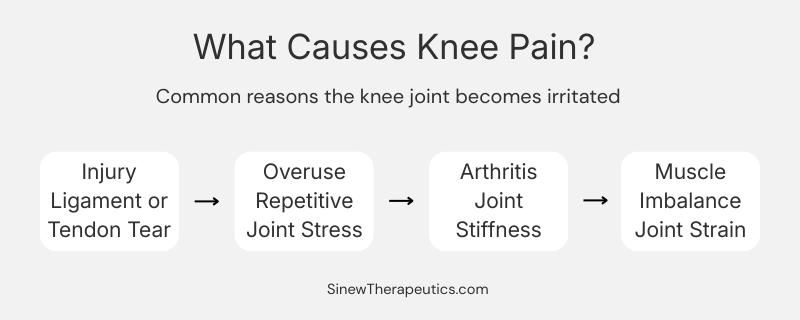
Diagram showing common causes of knee pain including repetitive stress, muscle imbalance, inflammation, and joint strain affecting tissues around the knee.
Repetitive Stress on the Knee Joint
One of the most common causes of knee pain is repetitive stress from daily activity.
Movements such as running, jumping, climbing stairs, or squatting place repeated pressure on the knee joint.
Over time, these repeated movements can irritate soft tissues including:
- tendons
- ligaments
- cartilage
- supporting muscles
When the knee experiences more stress than it can comfortably recover from, soreness and inflammation may develop.
Sudden Strain or Impact
Sudden movement or impact can also irritate tissues within the knee.
Examples include:
- quick changes in direction during sports
- awkward landings when jumping
- lifting heavy objects
- unexpected twisting motions
These movements can strain muscles or connective tissues surrounding the knee.
Muscle Imbalance and Movement Mechanics
Weak or tight muscles around the hips and legs can change how the knee moves.
For example, weak glute muscles or tight quadriceps can alter joint mechanics during walking or running.
When movement patterns are uneven, extra pressure may be placed on certain areas of the knee.
This increased stress can gradually lead to discomfort.
Inflammation in the Knee
Inflammation is the body’s natural response to tissue irritation.
When muscles or connective tissues become overworked, the body may increase blood flow to the area as part of the healing process.
Common signs of inflammation around the knee may include:
- soreness
- swelling
- stiffness
- warmth in the joint
Reducing irritation and supporting circulation can help tissues return to normal function.
Topical Recovery Support
Topical therapies are often used to support recovery of muscles and connective tissue surrounding the knee.
For recent irritation or strain, some individuals apply Acute Sinew Liniment. In some recovery routines, Sinew Herbal Ice may be used alongside the liniment to provide additional cooling support.
When soreness becomes more persistent or tissues feel tight, Chronic Sinew Liniment may be applied. Some individuals also use a Sinew Injury Poultice together with the liniment to support deeper tissue recovery.
Massage-based recovery can also be supported with Sinew Sports Massage Oil.
Safety Notes
This article provides general educational information about knee pain.
Anyone experiencing severe knee injury, sudden swelling, or difficulty bearing weight should seek evaluation from a qualified healthcare professional.
Frequently Asked Questions
What is the most common cause of knee pain?
Repetitive stress and overuse are among the most common causes of knee discomfort.
Can muscle imbalance cause knee pain?
Yes. Weak or tight muscles around the hips and legs can alter movement mechanics and place additional stress on the knee.
Why does knee pain sometimes appear after exercise?
Exercise may place increased stress on tissues around the knee, which can cause temporary irritation if muscles are fatigued.
Does inflammation always mean injury?
No. Mild inflammation can occur as part of the body's normal response to stress or overuse.
Can massage help knee pain?
Massage may help improve circulation and relax tight muscles surrounding the knee joint.
Related Articles in This Week’s Series
- What Is Knee Pain?
- How the Knee Joint Works
- Who Gets Knee Pain Most Often?
- Does Liniment Help Knee Pain?
- How to Recover From Knee Pain
- Common Myths About Knee Pain
Related Recovery Tools
• Acute Sinew Liniment — topical support for fresh strain or irritation
• Chronic Sinew Liniment — used for persistent soreness and tight tissue
• Sinew Herbal Ice — cooling support often used with acute liniment
• Sinew Injury Poultice — traditional poultice used with chronic liniment
• Sinew Sports Massage Oil — massage-based muscle recovery support
• Acute Sinew Liniment — topical support for fresh strain or irritation
• Chronic Sinew Liniment — used for persistent soreness and tight tissue
• Sinew Herbal Ice — cooling support often used with acute liniment
• Sinew Injury Poultice — traditional poultice used with chronic liniment
• Sinew Sports Massage Oil — massage-based muscle recovery support